
Marine Environmental Education for youth in Conakry
On 13 June 2025, CCAHD partner Biotope Guinée organised an environmental education day at the École Franco-Guinéenne Djendjen school in the urban commune of Lambanyi. The initiative aimed to raise environmental awareness among young students aged 1 to 15 through fun and educational activities focused on marine ecology and cetacean protection.
Through an interactive presentation, the children discovered the riches of the marine environment, in particular the essential role that dolphins play in the ecosystem. Following a dramatic reading of the story ‘Keita and the Dolphins’, a copy of the book was distributed to each pupil, ensuring that they would be able to re-read and internalize the book’s important conservation messages and share the story with their family members and friends.
A simulated dolphin stranding then taught the children how to respond to dolphins in trouble, while another game in which children disentangled many marine animals from a fishing net helped them understand the dangers of plastic pollution and bycatch of threatened species in non-selective fishing gears.
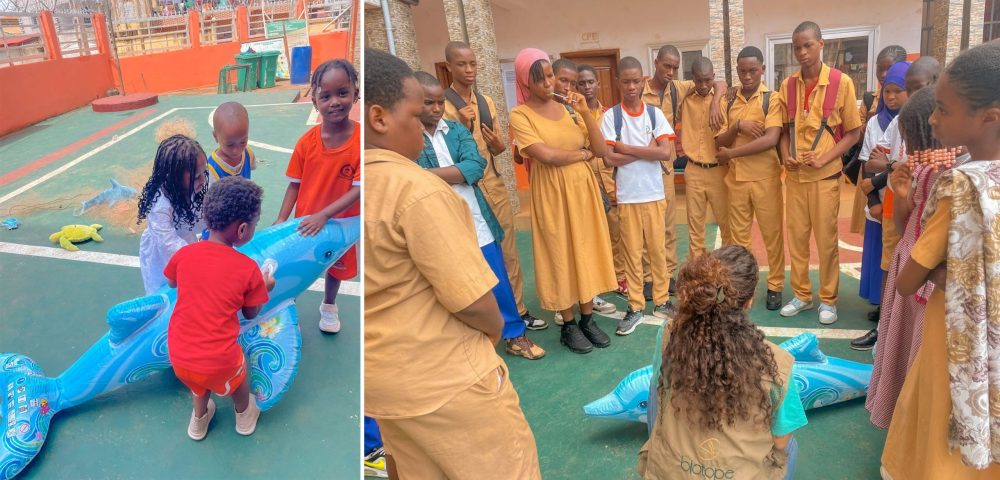
Children took part in a simulated dolphin stranding exercise, learning how to respond when dolphins are in trouble.
The highlight of the day was the official launch of the ‘Capitaines Ecolos’ programme. Two pupils from each class were chosen to take on the role of environmental ambassadors. Their mission is to ensure that eco-friendly practices are followed in the school and to raise awareness among their classmates, families and communities about the importance of protecting nature. One of the pupils proudly proclaimed: ‘I, Captain Ecolo, am committed to protecting the sea!’ “

The key moment of the day came with the launch of the “Captain Écolos programme”, sparking greater love for the ocean
Thanks to this day, more than 30 students were educated and trained through educational games, activity books and marine mammal identification tools.
This activity is part of Biotope Guinea’s ongoing efforts to strengthen environmental education from an early age by promoting a participatory, inclusive approach rooted in local realities, and follows on from a 2.5 year project funded by the Mohamed Bin Zayed Species Conservation Fund.